


A recent study published in the renowned medical journal Cell confirms that taking berberine for two years after adenoma resection significantly reduced adenoma recurrence rates (34.7% vs. 52.1%) and overall tumor incidence (63.4% vs. 71.0%) six years after discontinuation. This remarkable effect suggests that berberine may be a potential long-term preventive treatment for adenoma recurrence after polypectomy!
Key Findings at a Glance:
Berberine prevented adenoma recurrence during a six-year follow-up period after treatment;
Berberine also reduced the incidence of colorectal tumors and non-advanced adenomas;
Berberine is a promising candidate for post-polypectomy prevention;
01
Breakthrough Study: Protective Efficacy Remains Undiminished Six Years After Discontinuation
Breakthrough Study: Protective Efficacy Remains Undiminished Six Years After Discontinuation
In 2014, the Fang Jingyuan/Chen Yingxuan team at Shanghai Jiao Tong University initiated a double-blind, randomized, placebo-controlled, multicenter trial to evaluate the chemopreventive effect of berberine on colorectal adenoma recurrence. A total of over 1,100 patients who underwent complete colonoscopy-assisted resection of colorectal adenomas were enrolled. To exclude the influence of other factors, patients who regularly took medications such as aspirin and vitamin D were excluded from the trial. All patients were divided into a berberine group and a placebo group in a 1:1 ratio. Patients in the two groups took three 0.1-gram tablets of berberine or placebo twice daily, respectively. The trial was followed for two years, with all patients undergoing colonoscopy again at the end of the first and second years. At the end of the two-year follow-up, 36% of patients in the berberine group had re-detected adenomas, compared to 47% in the placebo group, representing a 23% relative risk reduction, with no serious adverse events.
Following the completion of the two-year randomized trial, the current retrospective study was conducted to extend the trial by continuing to follow the trial participants for a median of six years. The goal was to evaluate the long-term preventive effect of berberine on colorectal adenoma recurrence after polypectomy.
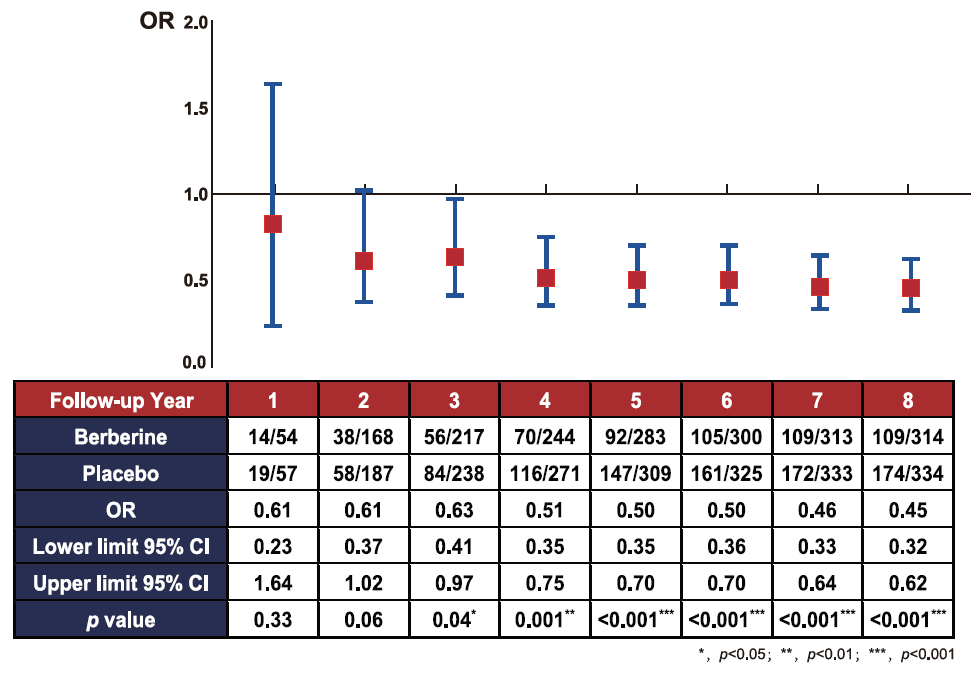
Figure 2. Cumulative Adenoma Recurrence Rate by Year.
Cumulative colorectal adenoma recurrence rate for each follow-up year after the 2-year randomized trial.
ORs and 95% CIs were calculated by multivariable logistic regression and are shown as points and lines, respectively, in the graph. Covariates included age, sex, clinical center, body mass index (BMI), smoking status, family history of colorectal cancer, history of hypertension and diabetes, and medication use (e.g., calcium, statins, and aspirin). The proportions in the berberine and placebo groups were the ratio of the cumulative number of participants with recurrent adenomas to the cumulative number of participants who underwent colonoscopy, respectively. The ORs, lower and upper limits of the 95% CI, and p-values for the two groups are shown below the graph. *p < 0.05, **p < 0.01, ***p < 0.001. Abbreviations: OR: odds ratio; CI: confidence interval.
ORs and 95% CIs were calculated by multivariable logistic regression and are shown as points and lines, respectively, in the graph. Covariates included age, sex, clinical center, body mass index (BMI), smoking status, family history of colorectal cancer, history of hypertension and diabetes, and medication use (e.g., calcium, statins, and aspirin). The proportions in the berberine and placebo groups were the ratio of the cumulative number of participants with recurrent adenomas to the cumulative number of participants who underwent colonoscopy, respectively. The ORs, lower and upper limits of the 95% CI, and p-values for the two groups are shown below the graph. *p < 0.05, **p < 0.01, ***p < 0.001. Abbreviations: OR: odds ratio; CI: confidence interval.
Results 1: Berberine Reduces the Risk of Colorectal Adenoma Recurrence
During a median follow-up of 78 months, 34.7% (109/314) of patients in the berberine group and 52.1% (174/334) of patients in the placebo group experienced colorectal adenoma recurrence (HR = 0.58; p < 0.001), a relative risk reduction of 42% (the difference remained significant in sensitivity analysis). This suggests that berberine has a long-term effect in reducing the risk of colorectal adenoma recurrence after endoscopic resection.
Result 2: Berberine Reduces the Risk of Colorectal Tumor Recurrence
Regarding tumor prevention, 199 patients (63.4%) in the berberine group and 237 patients (71.0%) in the placebo group developed any type of tumor (HR = 0.75; p = 0.004), a relative risk reduction of 25% (the difference between the two groups remained significant in sensitivity analysis).
During a median follow-up of 78 months, 34.7% (109/314) of patients in the berberine group and 52.1% (174/334) of patients in the placebo group experienced colorectal adenoma recurrence (HR = 0.58; p < 0.001), a relative risk reduction of 42% (the difference remained significant in sensitivity analysis). This suggests that berberine has a long-term effect in reducing the risk of colorectal adenoma recurrence after endoscopic resection.
Result 2: Berberine Reduces the Risk of Colorectal Tumor Recurrence
Regarding tumor prevention, 199 patients (63.4%) in the berberine group and 237 patients (71.0%) in the placebo group developed any type of tumor (HR = 0.75; p = 0.004), a relative risk reduction of 25% (the difference between the two groups remained significant in sensitivity analysis).
02
Why Berberine? Three Key Advantages
Why Berberine? Three Key Advantages
Berberine
Berberine, a traditional Chinese medicine ingredient, is a safe, natural compound with global applicability.
It targets and reshapes the intestinal microbiome to precisely inhibit cancer-promoting bacteria, modulate the tumor microenvironment, and block the inflammation-cancer pathway.
Compared to the short-term effects of aspirin and calcium supplements, berberine offers "two years of protection" with six years of efficacy.
It is safe and affordable, with no adverse reactions, making it particularly suitable for patients with metabolic disorders such as diabetes and hyperlipidemia.
03
Protecting Gut Health: Strengthening Health Management
Berberine
Protecting Gut Health: Strengthening Health Management
Berberine
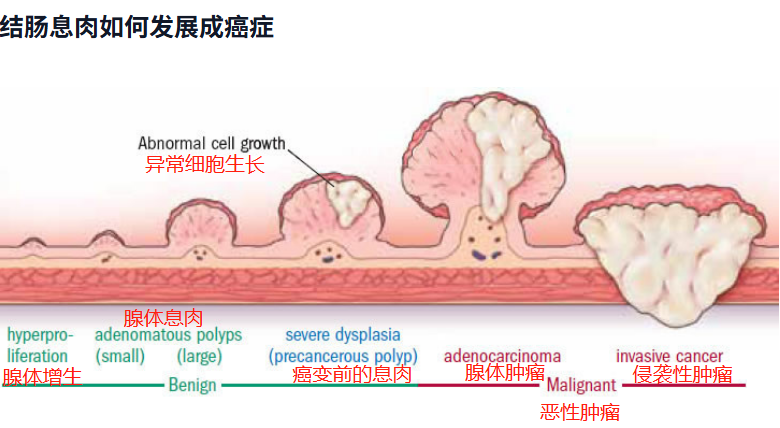
Lifestyle Intervention: Reduce Inflammation and Oxidative Stress
- Dietary Adjustment: Increase fruits and vegetables, dietary fiber, and probiotics, and reduce high-fat and high-salt foods.
- Weight Management: Obese individuals have a 40% increased risk of recurrence; weight control should be achieved through exercise and diet.
- Dietary Adjustment: Increase fruits and vegetables, dietary fiber, and probiotics, and reduce high-fat and high-salt foods.
- Weight Management: Obese individuals have a 40% increased risk of recurrence; weight control should be achieved through exercise and diet.
Strengthening Management for High-Risk Individuals
- Helicobacter pylori Eradication: The recurrence rate of polyps in infected individuals is 2-fold increased; postoperative testing and eradication are necessary.
- Screening for Hereditary Polyposis: Genetic testing (such as APC gene mutations) is recommended for patients with a family history, and preventive surgery may be considered if necessary.
- Monitoring Metabolic Indicators: When homocysteine is >8μmol/L, combined with active folic acid and vitamin B12, the recurrence rate decreases by 57%.
- Helicobacter pylori Eradication: The recurrence rate of polyps in infected individuals is 2-fold increased; postoperative testing and eradication are necessary.
- Screening for Hereditary Polyposis: Genetic testing (such as APC gene mutations) is recommended for patients with a family history, and preventive surgery may be considered if necessary.
- Monitoring Metabolic Indicators: When homocysteine is >8μmol/L, combined with active folic acid and vitamin B12, the recurrence rate decreases by 57%.
04
Berberine in Gut and Metabolic Health Products
Berberine
Berberine in Gut and Metabolic Health Products
Berberine
Berberine maintains gut health by protecting L cells from oxidative and inflammatory damage, enhancing mitochondrial function, and promoting GLP-1 secretion through the AMPK and TGR5 pathways, thereby improving insulin secretion, satiety, and blood sugar stability. Berberine also beneficially regulates the intestinal microbiota by inhibiting pathogens and enriching beneficial bacteria (such as Akkermansia), increasing short-chain fatty acid (SCFA) production, strengthening intestinal epithelial cell tight junctions, and reducing endotoxemia. By regulating the gut-liver axis and activating AMPK, it inhibits lipogenesis, promotes fatty acid oxidation, and alleviates hepatic steatosis in non-alcoholic fatty liver disease (NAFLD).

It also lowers serum uric acid by inhibiting xanthine oxidase, regulating renal urate transporters, and promoting uricolytic bacteria. These combined effects make berberine important in the treatment of metabolic syndrome, obesity, type 2 diabetes, non-alcoholic fatty liver disease, and hyperuricemia.
Ref:
https://www.health.harvard.edu/diseases-and-conditions/they-found-colon-polyps-now-what
Xu X, Yi H, Wu J, Kuang T, Zhang J, Li Q, Du H, Xu T, Jiang G, Fan G. Therapeutic effect of berberine on metabolic diseases: Both pharmacological data and clinical evidence. Biomed Pharmacother. 2021 Jan;133:110984
https://www.health.harvard.edu/diseases-and-conditions/they-found-colon-polyps-now-what
Xu X, Yi H, Wu J, Kuang T, Zhang J, Li Q, Du H, Xu T, Jiang G, Fan G. Therapeutic effect of berberine on metabolic diseases: Both pharmacological data and clinical evidence. Biomed Pharmacother. 2021 Jan;133:110984
Tan et al., Berberine for preventing colorectal adenoma recurrence and neoplasm occurrence: 6-Year follow-up of a randomized clinical trial, Cell Reports Medicine (2025), https://doi.org/10.1016/j.xcrm.2025.102293


