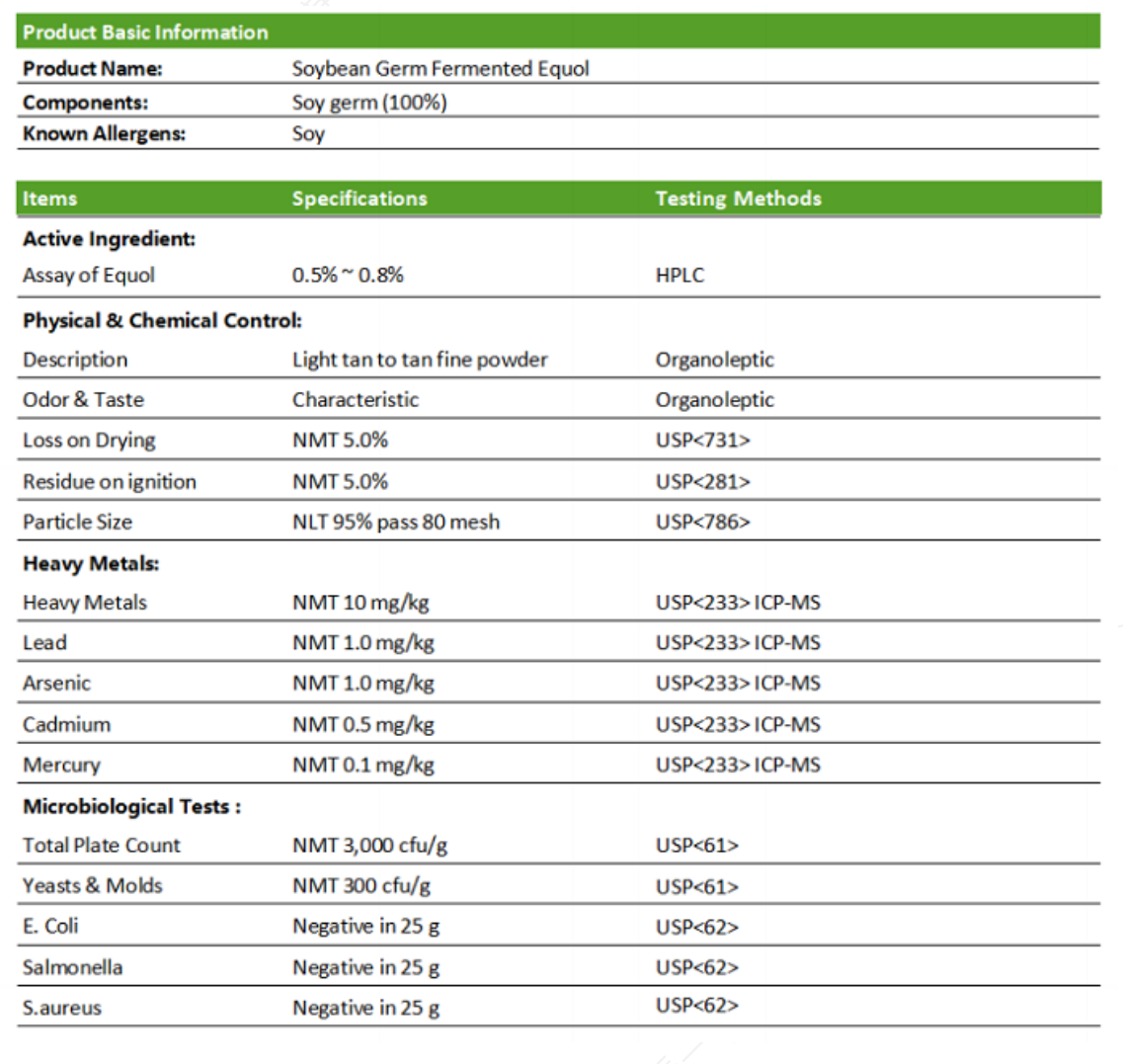


Equol was first isolated from the urine of pregnant mares in 1932, and 50 years later was identified in human urine as soy isoflavones, soy flavonoids, and metabolites of soy flavonoids, produced by intestinal bacteria of some (but not all) adults.
Equol Original meaning: phenolic substances found in the urine of pregnant mares
Active source of equol: It has an active structure similar to hormones and can bind to hormone receptors.
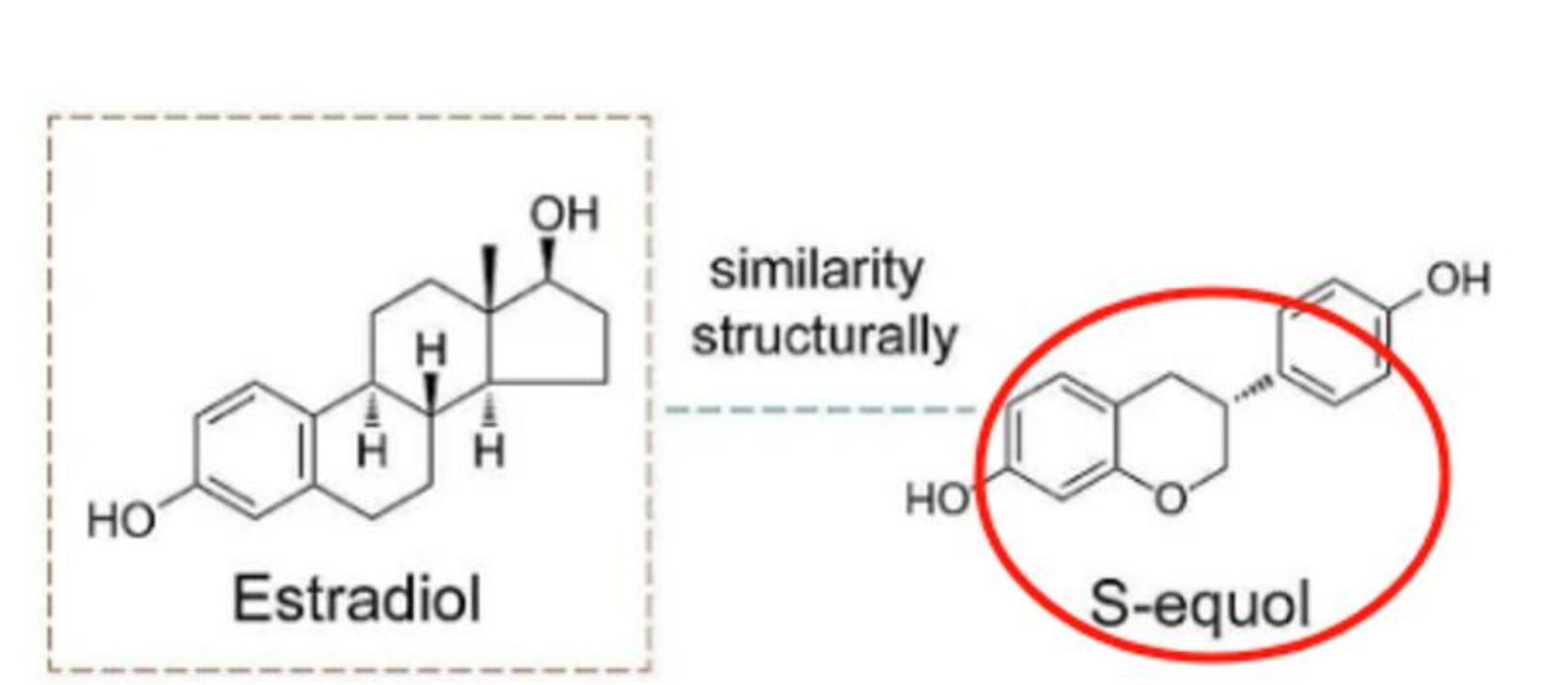
Equol characteristics:
It belongs to isoflavanol [7-hydroxy-3-(4'-hydroxyphenyl)-chromanol] with poor water solubility and is unstable in acid solution environment; it has excellent lipophilicity, the ability to cross the blood-brain barrier, and higher bioavailability. Source:
Equol in animals comes from the degradation of plant flavonoids by intestinal bacteria. Human S-equol is formed by soybean flavonoids (daidzein) (Lactobacillus, Escherichia coli, Enterococcus faecalis, etc.). Humans take it orally and produce S-equol; intestinal microorganisms include (Bifidobacterium, daidzein). It takes 12 to 36 hours for equol to appear in plasma.
Equol has chiral carbon atoms and exists in enantiomers. Microbial fermentation only produces S-equol. Chemical synthesis method obtains a mixture of S-equol and R-equol.
Equol in humans is produced by intestinal bacteria metabolizing ingested soy isoflavones.
It belongs to isoflavanol [7-hydroxy-3-(4'-hydroxyphenyl)-chromanol] with poor water solubility and is unstable in acid solution environment; it has excellent lipophilicity, the ability to cross the blood-brain barrier, and higher bioavailability. Source:
Equol in animals comes from the degradation of plant flavonoids by intestinal bacteria. Human S-equol is formed by soybean flavonoids (daidzein) (Lactobacillus, Escherichia coli, Enterococcus faecalis, etc.). Humans take it orally and produce S-equol; intestinal microorganisms include (Bifidobacterium, daidzein). It takes 12 to 36 hours for equol to appear in plasma.
Equol has chiral carbon atoms and exists in enantiomers. Microbial fermentation only produces S-equol. Chemical synthesis method obtains a mixture of S-equol and R-equol.
Equol in humans is produced by intestinal bacteria metabolizing ingested soy isoflavones.
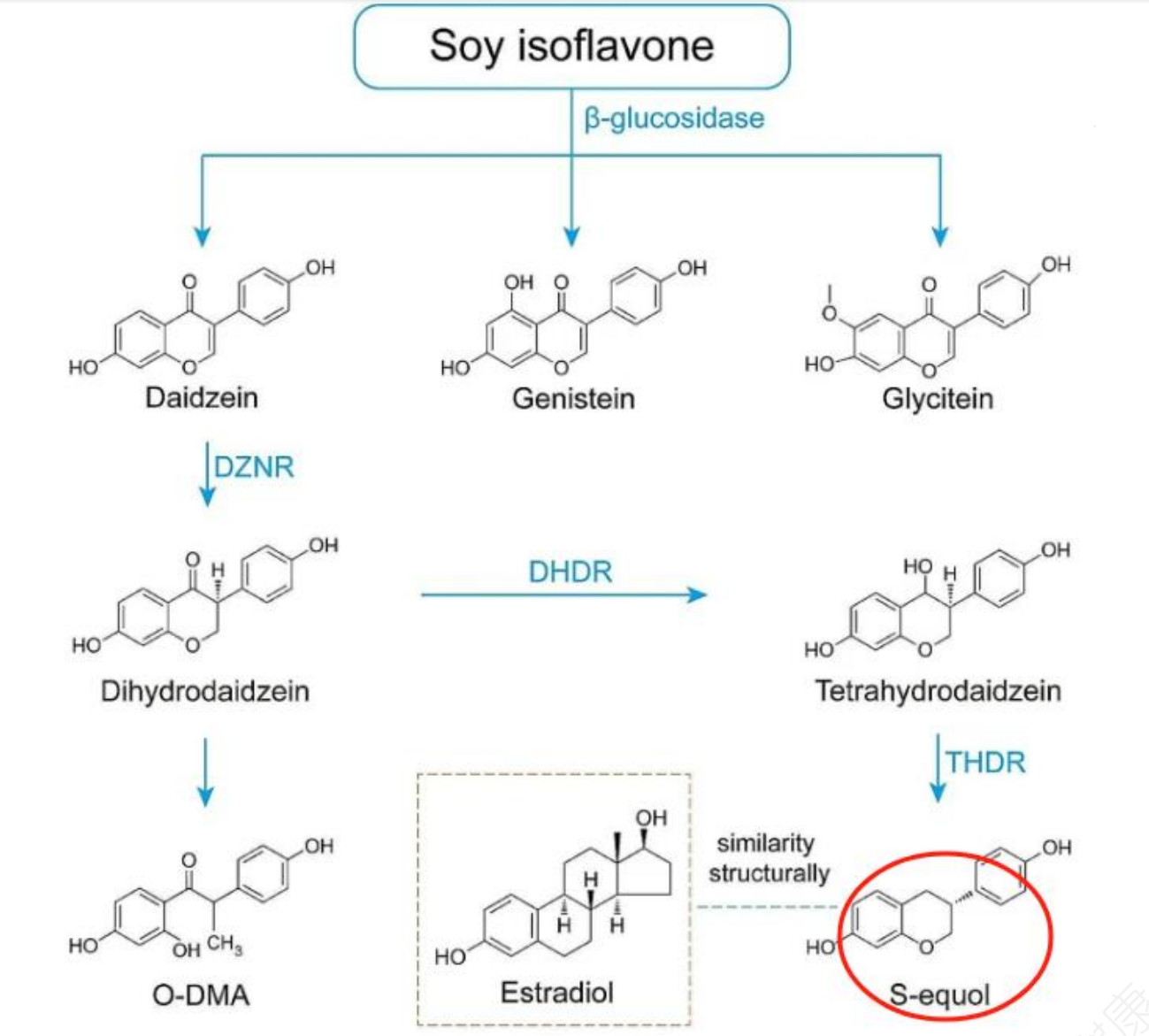
Intestinal microorganisms metabolize daidzein to produce only S-equol; chemical synthesis method obtains racemic body, which is composed of S-equol and R-equol. R-equol.
The biological activity of equol is similar to that of endogenous hormones in the human body. It belongs to the non-steroidal estrogen class of compounds. It can bind to hormone receptors and exert weak hormonal effects. It plays a beneficial role in various hormone-dependent diseases, including improving menopausal symptoms, preventing osteoporosis, and reducing the risk of breast cancer and prostate cancer.
S-equol has affinity for estrogen receptors (ER), including estrogen receptor α (ERa) and estrogen receptor B (ERB). However, the two isomers show different binding affinities for ERa and ERB, and S-equol has an affinity for ERB that is 13 times that of ERa.
The core mechanism of equol on the health of women and men:
1) Women: Equol has a selective affinity for estrogen receptor-B (ER-B) and exerts a weak estrogen effect
2) Men: Normal prostate tissue expresses estrogen receptor-β (ER-β), and ERβ is an anti-proliferative receptor. Equol binds to ERa and ERB to inhibit the growth of prostate cancer. β-binding, inhibiting prostate tissue proliferation and differentiation, antagonizing the effect of dihydrotestosterone, and is a potential new drug for the treatment of prostate cancer.
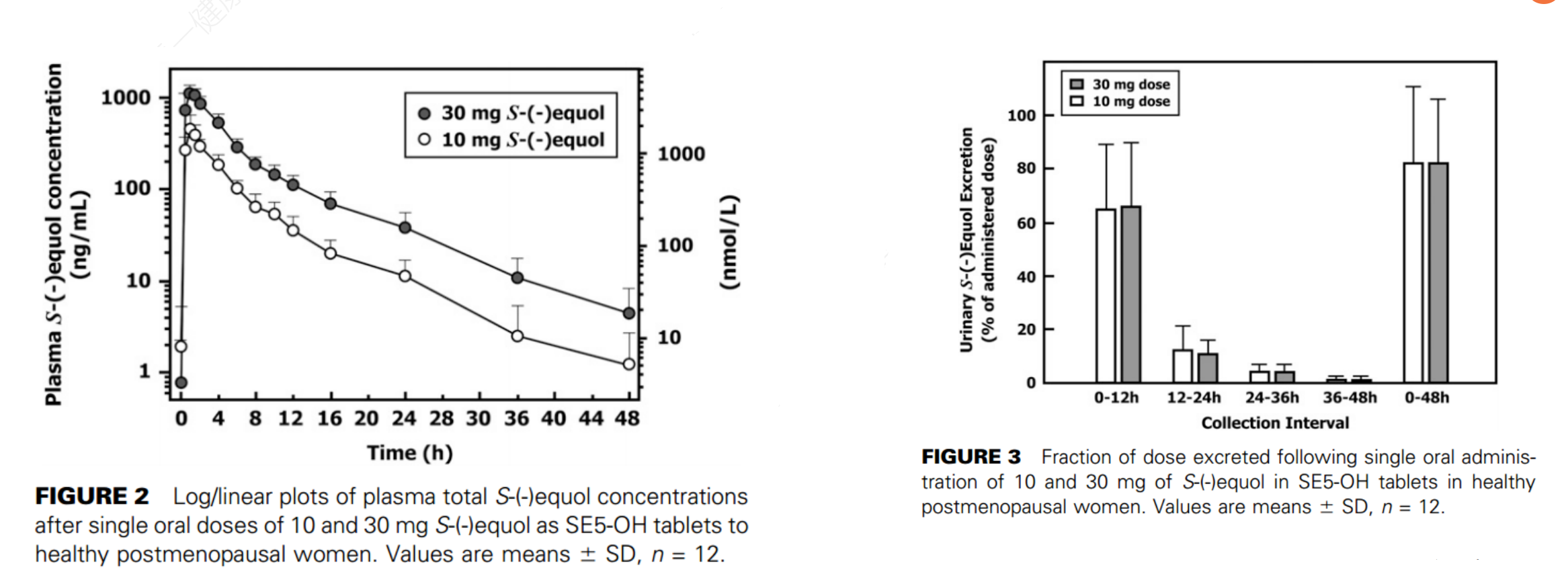
Pharmacokinetics of Equol (SE5-OH) in healthy postmenopausal women (A single-center, open-label, randomized, 2-period crossover design study)
Research methods: 12 healthy postmenopausal women (age: 58+5 years) took S-(-) equol tablets orally; dose: 10 and 30 mg
Analysis methods: Within 48 hours after administration, S-(-) equol in plasma and urine was determined by tandem mass spectrometry, and the production state of equol was determined after soy milk stimulation after pharmacokinetic sampling was completed.
Results:
Equol was rapidly absorbed after oral administration, and the time required to reach Cmax was about 1 hour (0.97-2.0 hours), and the half-life was 8h. The maximum plasma concentration/dose AUC and urinary excretion fraction (%fe,u) were similar (approximately 82%) for the two doses, indicating that the absorption and metabolism of S-equol is proportional to the dose.
Conclusion: The systemic bioavailability of S-equol is very high and higher than the published data for the soy isoflavones daidzein and genistein. The identity of the equol producer had no effect on the pharmacokinetics of S-equol.
Equol was rapidly absorbed after oral administration, and the time required to reach Cmax was about 1 hour (0.97-2.0 hours), and the half-life was 8h. The maximum plasma concentration/dose AUC and urinary excretion fraction (%fe,u) were similar (approximately 82%) for the two doses, indicating that the absorption and metabolism of S-equol is proportional to the dose.
Conclusion: The systemic bioavailability of S-equol is very high and higher than the published data for the soy isoflavones daidzein and genistein. The identity of the equol producer had no effect on the pharmacokinetics of S-equol.
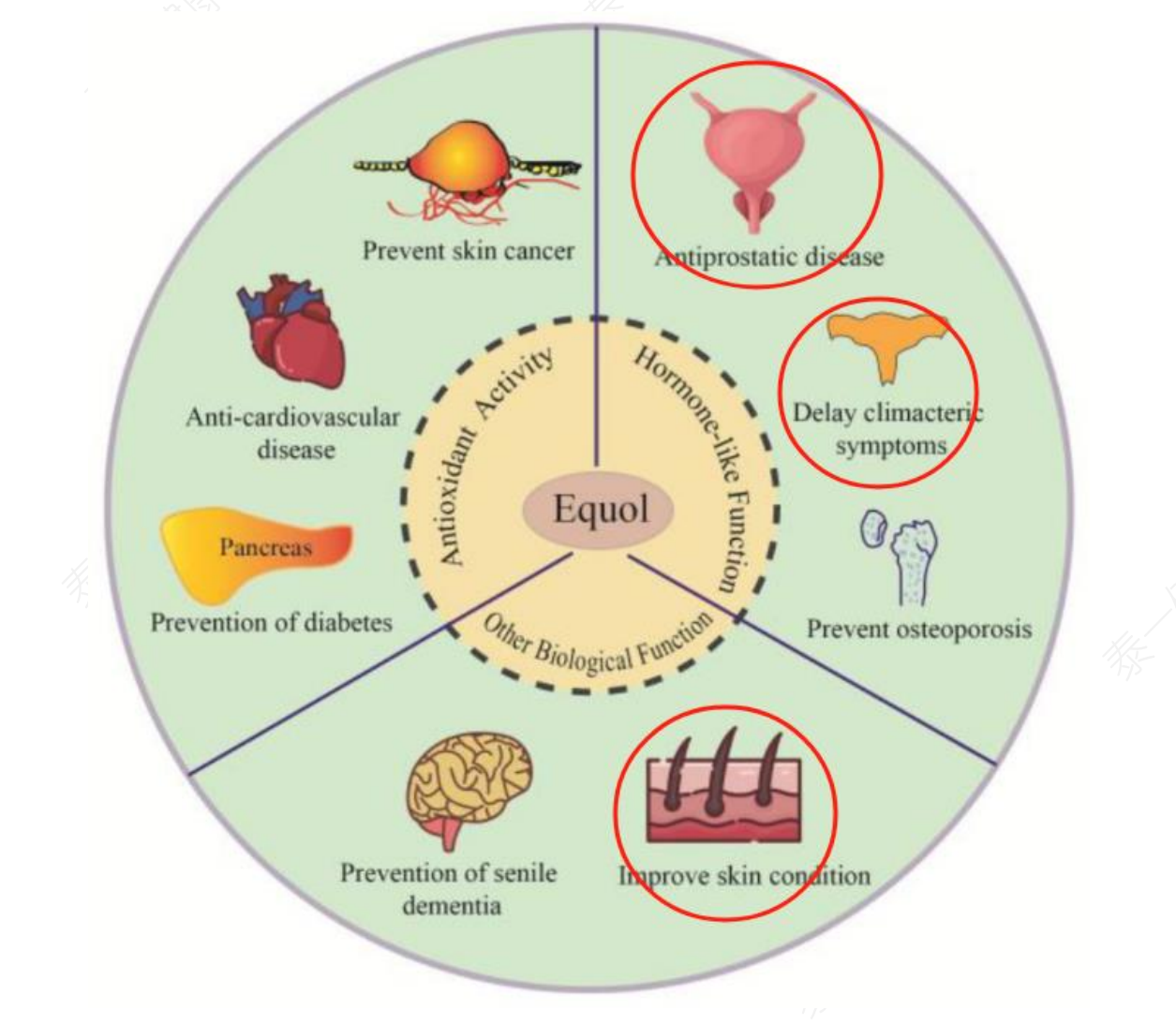
Improving menopausal syndrome
Patients who do not produce equol
Conclusion: Supplementation with S-equol can improve mood-related symptoms in peri-/postmenopausal patients;
(equol nonproducers) showed more significant improvements after intervention.
Patients who do not produce equol
Conclusion: Supplementation with S-equol can improve mood-related symptoms in peri-/postmenopausal patients;
(equol nonproducers) showed more significant improvements after intervention.
Improving skin health (anti-aging)
Equol can reduce skin aging in postmenopausal women.
Oral administration of equol can improve skin health in adult men.
Equol can reduce skin aging in postmenopausal women.
Oral administration of equol can improve skin health in adult men.
Improving prostate health
Equol stimulates the transcriptional activity of estrogen-related receptor Y (ERRY), thereby inhibiting the growth of prostate cancer PC-3 cells. Equol significantly inhibited the growth of LNCap (human prostate cancer cell) cells at concentrations >10 μM; and caused DNA strand breaks in both cell lines at concentrations >250 μM.
Equol inhibited the growth of prostate cancer cells by inducing DNA damage at higher concentrations, and also inhibited the invasion of DU145 prostate cancer cells by downregulating matrix metalloproteinase 2 (MMP-2) and M9.
These results suggest that the ability to produce equol or equol itself is closely associated with a lower incidence of prostate cancer. The results also suggest that a diet based on soy isoflavones will help prevent prostate cancer.
Equol stimulates the transcriptional activity of estrogen-related receptor Y (ERRY), thereby inhibiting the growth of prostate cancer PC-3 cells. Equol significantly inhibited the growth of LNCap (human prostate cancer cell) cells at concentrations >10 μM; and caused DNA strand breaks in both cell lines at concentrations >250 μM.
Equol inhibited the growth of prostate cancer cells by inducing DNA damage at higher concentrations, and also inhibited the invasion of DU145 prostate cancer cells by downregulating matrix metalloproteinase 2 (MMP-2) and M9.
These results suggest that the ability to produce equol or equol itself is closely associated with a lower incidence of prostate cancer. The results also suggest that a diet based on soy isoflavones will help prevent prostate cancer.