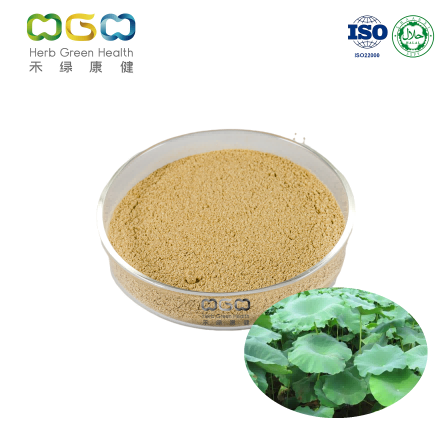
Lotus Leaf:Bitter, astringent and neutral in nature, it enters the liver, spleen, stomach and heart meridians. It has the effect of clearing summer heat and inducing dampness, raising the yang and stopping bleeding.
It can be used in the treatment of summer-heat diseases, spleen deficiency and diarrhea, and many kinds of hemorrhage.
It can be used in the treatment of summer-heat diseases, spleen deficiency and diarrhea, and many kinds of hemorrhage.
Lotus leaf contains a variety of alkaloids and vitamin C, such as lotus alkaloids, proto-hotanine and hollandine, which have antibacterial, lipid regulation, antioxidant and hemostatic and other pharmacological effects.
Lotus leaf has the efficacy of clearing heat and relieving heatstroke, elevating clear yang, cooling blood and stopping bleeding. It is used in treating summerheat and thirst, summer-dampness and diarrhea, spleen deficiency, blood in stool and leakage. Lotus leaf charcoal is used to stop bleeding by astringency and resolving blood stasis. It is used in bleeding disorder and postpartum hematemesis. Pharmacological studies have shown that lotus leaf has diuretic and laxative effects, passes intestinal toxins, lowers fat and removes oil, clears summer heat, etc. It can significantly reduce serum triglyceride and cholesterol content, and has the effect of regulating the health of blood lipids.
Flavonoids
At least ten flavonoid components such as quercetin, kaempferol, rutin, quercetin-3-O-glucuronide, quercetin-3-propyl ester, isoquercitrin and chrysin have been isolated from lotus leaves. The main flavonoid is lotiferin, followed by quercetin, isoquercetin and other common flavonoids. Studies have shown that lotus leaf flavonoids have the functions of antioxidant, anti-aging, blood lipid-lowering, cholesterol-lowering and regulating cardiovascular and cerebrovascular diseases.
Alkaloids
So far, three monomer components and 16 alkaloid compounds have been isolated from lotus leaves. The five main alkaloids are Nuciferine, N-Nomuciferine, Anonaine, Pronuciferine and Armepavine. Nomuciferine is the main hypolipidemic active ingredient in lotus leaf.
Volatile essential oil
The volatile essential oils in lotus leaf are diverse, mainly monoterpenes, saturated fatty acids, alkaloids and aliphatic hydrocarbons. The main components are trans stigmasterol, trans isolimonene, calamus oil terpenes and so on.
Organic Acid Components
Tartaric acid, citric acid, malic acid, oxalic acid, gluconic acid, succinic acid, gallic acid, n-octadecanoic acid, benzoic acid, o-hydroxybenzoic acid and other organic acids and non-volatile organic acids have been found in Lotus leaf.
Other components
Lotus leaf also contains β-sitosterol, carotene, β-carotene, tannins, saponins, steroids, vitamin C, Lotus leaf polyphenols, proanthocyanidins, carbohydrates, lipids, proteins, Lotus leaf polysaccharides and antimitotic alkaline components.
The main role of lotus leaf alkaline
1. Lotus leaf contains Hordenine, which is an alkaloid containing effective lipolytic alkaloids that can effectively break down fats and strongly expel them from the body. It can strongly and densely cover the intestinal wall of the human body, forming a fat isolation film, blocking the absorption of lipids and preventing the accumulation of fats, so as to improve the greasy eating habit.
2. Huperzine has excellent lipid-lowering health effects, due to the insensitivity of obese human cells to insulin, patients with glucose tolerance is often reduced, total lipids, cholesterol, triglycerides and free fatty acids are often increased, presenting hyperlipidemia and hyperlipoproteinemia, which is the basis for the induction of diabetes mellitus, atherosclerosis, coronary heart disease, cholelithiasis, hypertension and other diseases, Huperzine can effectively break down the lower body cell fat and improve its perception of insulin, so as to improve its effect on the body. Insulin perception, preventing and regulating high-fat diseases.
Flavonoids
At least ten flavonoid components such as quercetin, kaempferol, rutin, quercetin-3-O-glucuronide, quercetin-3-propyl ester, isoquercitrin and chrysin have been isolated from lotus leaves. The main flavonoid is lotiferin, followed by quercetin, isoquercetin and other common flavonoids. Studies have shown that lotus leaf flavonoids have the functions of antioxidant, anti-aging, blood lipid-lowering, cholesterol-lowering and regulating cardiovascular and cerebrovascular diseases.
Alkaloids
So far, three monomer components and 16 alkaloid compounds have been isolated from lotus leaves. The five main alkaloids are Nuciferine, N-Nomuciferine, Anonaine, Pronuciferine and Armepavine. Nomuciferine is the main hypolipidemic active ingredient in lotus leaf.
Volatile essential oil
The volatile essential oils in lotus leaf are diverse, mainly monoterpenes, saturated fatty acids, alkaloids and aliphatic hydrocarbons. The main components are trans stigmasterol, trans isolimonene, calamus oil terpenes and so on.
Organic Acid Components
Tartaric acid, citric acid, malic acid, oxalic acid, gluconic acid, succinic acid, gallic acid, n-octadecanoic acid, benzoic acid, o-hydroxybenzoic acid and other organic acids and non-volatile organic acids have been found in Lotus leaf.
Other components
Lotus leaf also contains β-sitosterol, carotene, β-carotene, tannins, saponins, steroids, vitamin C, Lotus leaf polyphenols, proanthocyanidins, carbohydrates, lipids, proteins, Lotus leaf polysaccharides and antimitotic alkaline components.
The main role of lotus leaf alkaline
1. Lotus leaf contains Hordenine, which is an alkaloid containing effective lipolytic alkaloids that can effectively break down fats and strongly expel them from the body. It can strongly and densely cover the intestinal wall of the human body, forming a fat isolation film, blocking the absorption of lipids and preventing the accumulation of fats, so as to improve the greasy eating habit.
2. Huperzine has excellent lipid-lowering health effects, due to the insensitivity of obese human cells to insulin, patients with glucose tolerance is often reduced, total lipids, cholesterol, triglycerides and free fatty acids are often increased, presenting hyperlipidemia and hyperlipoproteinemia, which is the basis for the induction of diabetes mellitus, atherosclerosis, coronary heart disease, cholelithiasis, hypertension and other diseases, Huperzine can effectively break down the lower body cell fat and improve its perception of insulin, so as to improve its effect on the body. Insulin perception, preventing and regulating high-fat diseases.
3. Lotus leaf contains a large amount of dietary fiber, promote peristalsis, help defecation, remove the accumulation of toxins in the body, so as to improve sub-health.
4. There are many biological enzymes in lotus leaves that can promote the metabolism of waste water and electrolytes in the body, thus eliminating edema.
4. There are many biological enzymes in lotus leaves that can promote the metabolism of waste water and electrolytes in the body, thus eliminating edema.
1. Application in medicine:
The most clinical application of lotus leaf is in the form of compound formula for weight loss and lipid lowering, the compound formula has been listed as Lipodinning, Lipid-lowering Ning, Compound Chinese Medicine Weight-loss Capsules, Light Health Capsules, Lipid-lowering Ⅰ Capsules, Red Lotus Bulk and so on. It is mainly used to prevent and control coronary heart disease, atherosclerosis and hyperlipidemia.
The most clinical application of lotus leaf is in the form of compound formula for weight loss and lipid lowering, the compound formula has been listed as Lipodinning, Lipid-lowering Ning, Compound Chinese Medicine Weight-loss Capsules, Light Health Capsules, Lipid-lowering Ⅰ Capsules, Red Lotus Bulk and so on. It is mainly used to prevent and control coronary heart disease, atherosclerosis and hyperlipidemia.
2、Application in food and health products
Currently on the market lotus leaf extract products are: lotus leaf tablet candy, compound lotus leaf punch, combination, capsules, various lotus leaf health tea, fruit flavor lotus leaf juice, lotus leaf honeysuckle health chewing gum, lotus leaf health toothpaste, lotus leaf honey health tablets. Mainly used for weight loss and prevention of coronary heart disease, hypertension, diabetes, cerebrovascular disease.
Currently on the market lotus leaf extract products are: lotus leaf tablet candy, compound lotus leaf punch, combination, capsules, various lotus leaf health tea, fruit flavor lotus leaf juice, lotus leaf honeysuckle health chewing gum, lotus leaf health toothpaste, lotus leaf honey health tablets. Mainly used for weight loss and prevention of coronary heart disease, hypertension, diabetes, cerebrovascular disease.