What is the difference between Panax ginseng and Panax notoginseng?
Panax notoginseng is closely related to Panax ginseng and Panax quinquefolium, both of which belong to Panax quinquefolium. But they have both similarities and obvious differences. Panax notoginseng is adapted to the northern environment and can only survive in a small special area near the southern Tropic of Cancer.
Know these two plants:
Ginseng: fleshy, medicinal root of the genus Panax of the family Acanthaceae, found mainly in East Asia, especially in cold regions. Ginseng is a common medicinal herb in Asia. It is mainly distributed in Jilin, Liaoning and Heilongjiang provinces of Northeast China because of its preference for cold, humid climate, strong cold resistance and avoidance of direct light, best born on Baekdu Mountain. The main medicinal part is Panaxginseng C. A. Mey's dry roots and rhizomes. Specifications of garden ginseng, ginseng, red ginseng and so on.
Panax notoginseng, also known as Panax ginseng, Panax Panax pseudoginseng var. Notoginseng and Panax Basil, is a precious traditional medicinal herb with high medicinal value. Yunnan Wenshan Panax Notoginseng has the longest planting history, the most authentic quality, and the planting area, output accounts for more than 80% of the country. It has been cultivated for more than 400 years and used for nearly 600 years.
The main medicinal parts are the dried roots and rhizomes of Panaxnotoginseng (Burk. f. H, Chen.
Panax notoginseng, also known as Panax ginseng, Panax Panax pseudoginseng var. Notoginseng and Panax Basil, is a precious traditional medicinal herb with high medicinal value. Yunnan Wenshan Panax Notoginseng has the longest planting history, the most authentic quality, and the planting area, output accounts for more than 80% of the country. It has been cultivated for more than 400 years and used for nearly 600 years.
The main medicinal parts are the dried roots and rhizomes of Panaxnotoginseng (Burk. f. H, Chen.
 |
 |
| Notoginseng | Ginseng |
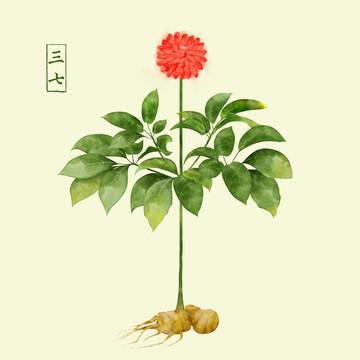
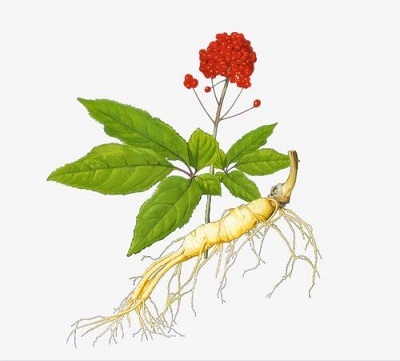
The images also show that Ginseng and Panax notoginseng, both perennial plant, are similar in appearance. Stems erect, glabrous; leaves palmately compound, whorled; umbels solitary terminal, flowers small, yellowish green, petaline, ; Drupe Berrylike. Branches and leaves branch petiole branch, leaves similar, and will produce red seeds.
Different
(1) the main root of panax ginseng is succulent cylindrical or fusiform, the lower part is often branched, the top of which is rhizome with 3 ~ 6 whorled leaves, the top of which is long-stalked, the leaflets are usually 5, elliptic to long-elliptic, the fruit is oblate, red when ripe: flowering 6 ~ 7 months, fruit 7 ~ 9 months. More than in the fall, digging, washing, drying or drying.
(1) the main root of panax ginseng is succulent cylindrical or fusiform, the lower part is often branched, the top of which is rhizome with 3 ~ 6 whorled leaves, the top of which is long-stalked, the leaflets are usually 5, elliptic to long-elliptic, the fruit is oblate, red when ripe: flowering 6 ~ 7 months, fruit 7 ~ 9 months. More than in the fall, digging, washing, drying or drying.
(1) the main root of Panax notoginseng is obconic or short fusiform, often with nodulation branches: compound leaves 3 ~ 4 whorled stem apex, leaflets often
5 ~ 7, long ellipsoid to obovate-long ellipsoid: nearly kidney-shaped fruit, red when ripe: flowering 6 ~ 8 months, fruit 8 ~ 10 months. Before flowering in autumn, dig, wash, separate main root, branch root and rhizome, dry.
5 ~ 7, long ellipsoid to obovate-long ellipsoid: nearly kidney-shaped fruit, red when ripe: flowering 6 ~ 8 months, fruit 8 ~ 10 months. Before flowering in autumn, dig, wash, separate main root, branch root and rhizome, dry.
Different traits
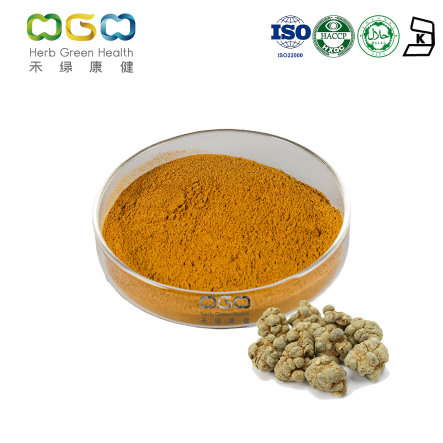 |
(1) the main root was fusiform or conic, 1 ~ 6cm long, with a waxy lustre and grayish brown or grayish yellow surface.
The cork layer is a series of cells, the inner layer of the Cork is not obvious, the phloem is scattered with resin channels: the cambium rings; (2) there were stem scars at the top and tumor-like protuberances around (3) weight, firmness, skin and wood often separated after crushing: (4) gray-green, yellow-green or gray-white on the cross-section, with small brown spots on the skin; (5) the air is slightly bitter and then slightly sweet |
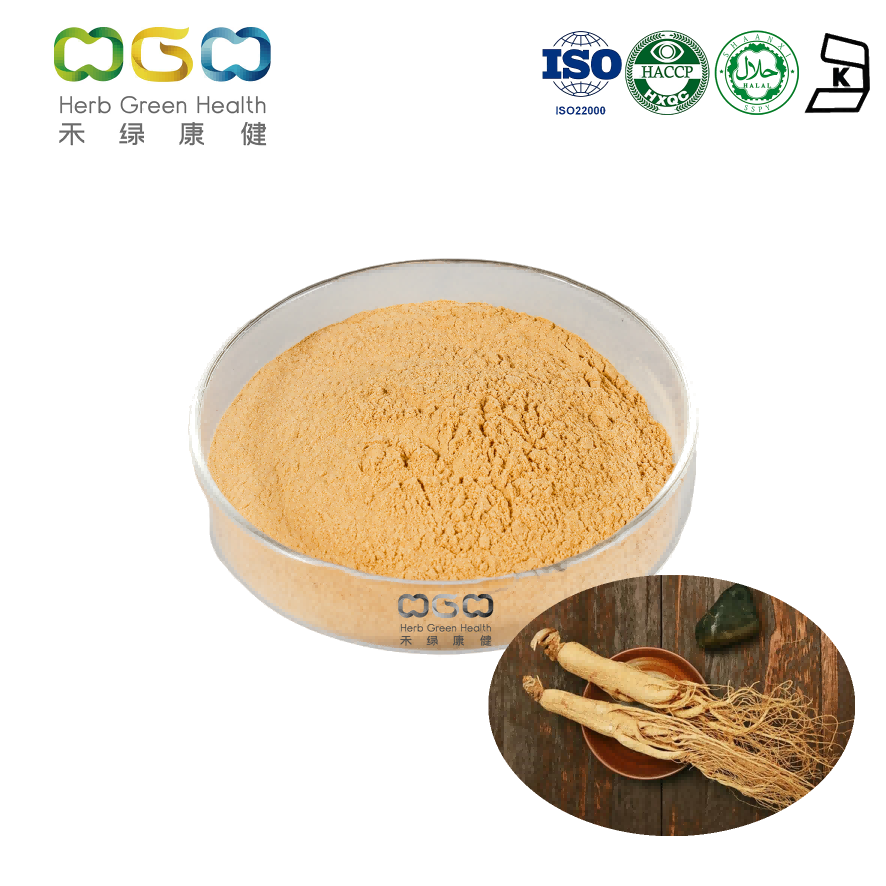 |
(1) the main root was cylindrical or fusiform, 3 ~ 15cm long, with greyish yellow surface, with sparse, discontinuous and coarse transverse lines and obvious longitudinal wrinkles on the upper part or the whole, and the apical rhizome (Phalaenopsis) with adventitious roots and sparse pit-like stem scars (Phalaenopsis) Cross section of the root
The powder is yellowish white. (2) the cork layer was a series of cells, the inner layer of the Cork was narrow, the phloem had a crack on the outer side, the parenchyma cells on the inner side were closely arranged, and there were few tree finger ducts scattered, and the resin duct contained golden-yellow secretions: the cambium formed a ring; The xylem ray is broad, the vessel is arranged intermittently in radial direction: the parenchyma cell contains calcium oxalate cluster crystal (3) hard, yellowish-white in cross section, brown-yellow in the cambium ring, yellow-brown spot resin channel and radial fissures in the skin; (4) special aroma, slightly bitter taste, sweet: (5) with bulbous, branched and fibrous roots |
Chemical similarity keywords:
Ginsenoside is a steroidal compound, triterpenoid saponin. It mainly exists in ginseng. They contain more than 17 amino acids, including arginine, glutamic acid and methionine, all of which contain GABA, which is a central nervous system inhibitor, just opposite to the depolarizing effect of notoginseng. The content of GABA in Panax is similar, and the minimum of GABA in Panax ginseng and Panax notoginseng is 1 ~ 4:1. The total amino acid content of ginseng is the highest.
Panax ginseng,Panax notoginseng all contain ginsenoside RG1, RG2, RE, RB1, RB2.
Ginseng contains: Ginsenoside RF, RS1
Panax notoginseng contains: Notoginseng Saponins R 1, R 2, R 4, R 6, FA
Ginseng contains: Ginsenoside RF, RS1
Panax notoginseng contains: Notoginseng Saponins R 1, R 2, R 4, R 6, FA
Panax ginseng mainly contains triterpenoid saponins, called ginsenosides: tetracyclic triterpenoids of Damastane-type saponins as the main active ingredient, and pentacyclic triterpenoids of oleanane saponins. Contains 0.05% volatile oil, a variety of amino acids, choline, vitamins and polysaccharides and other components.
Panax notoginsenoside contains notoginsenoside RRS, Y-gaba (GABA) , dencichine, flavonoids, polysaccharides, etc. . Modern pharmaceutical research has proved that the total saponins content of Panax notoginseng is slightly higher (6.24-10.32%) , ginseng is the lowest (about 4.84%) .
Of the project
Physical and chemical identification
Ginseng
1. Steroidal-terpenoid reaction: the ethanol extract of the powder is dropped into a saturated solution of antimony trichloride chloride and steamed dry to appear purple
2. Thin layer chromatography (TLC-RRBGinsenosidesRB1 RRE, RF, RG, Rg were used as control, and developed under the same condition
Thirty-seven
TLC: compared with ginsenoside RB1, RE, RG1 and Panax notoginsenoside R1, the other Thin layer chromatography were the same as ginseng.
Total ash and moisture should not exceed 5.0% and 12.0% , respectively.
Total ash content of Panax Notoginseng should not exceed 6.0% , acid insoluble gray should not exceed 3.0% , moisture should not exceed 14.0% .
Content determination
Ginsenoside: RG (C4ZH72014) + Re (CusHsz01s)≥0.30% RB, (CSHGZ0Z)≥0.20%
Ginsenoside: RG (C4ZH72014) + Re (CusHsz01s)≥0.30% RB, (CSHGZ0Z)≥0.20%
Panax notoginseng saponins:
ginsenoside RG1(C4ZH72014) + ginsenoside Re (C4shgz018) + Panax Notoginseng saponins
R (C47Hgo01s)≥ 0.50%
Efficacy
Ginseng.
Taste: sweet, slightly bitter, warm, flat. The spleen, lung and heart meridians. Ginseng is mainly used for tonifying spleen and lung, producing fluid to quench thirst, Improve Memory, Qi deficiency, spleen qi deficiency, lung qi deficiency, uneasiness, insomnia, dreaminess, palpitation and forgetfulness, etc. , is the best of the tonic. Panax ginseng is a kind of natural medicine, which is mainly used for tonifying the spleen and lung, producing fluid to quench thirst, calming the mind and increasing wisdom, Qi deficiency, deficiency of spleen-qi, deficiency of lung-qi, uneasiness, insomnia, dreaminess, palpitation and forgetfulness.
Could applied in tablet,capsule,solid beverage,We offer ODM&OEM one-stop serviceAny of the services you need could be customized
Notoginseng
Panax notoginseng has the effect of dispersing blood stasis and stopping bleeding, detumescence and relieving pain.
The results showed that the original Panax notoginseng saponins had anticoagulant effect, and the main substance was ginsenoside RG1, and the content of ginsenoside RG1 in Panax Notoginseng was the highest, therefore, Panax notoginseng is mainly characterized by promoting blood circulation and stanching bleeding in clinic, and ginseng is suitable for various bleeding syndromes both inside and outside human body by nourishing, such as hematochezia, hemorrhage, hemoptysis, trauma and coronary heart disease, hyperlipidemia and other heart cerebrovascular disease. Furthermore, the active ingredient of hemostasis, 137-element, is contained in all three kinds of medicinal materials.
Panax notoginseng is mainly used in the treatment of cardiac cerebrovascular disease,


