
Plants are considered the potential resources of various bioactive compounds. A number of medicinal plants have been widely used as functional foods and alternative medicines for the prevention and treatment of several diseases.
Mulberry is a well-known medicinal plant. Mulberry leaves contain numerous chemical constituents. 1-Deoxynojirimycin (DNJ), phenolics and flavonoids are the prominent functional compounds.Mulberry leaves have a balanced and highly digestible nutrient profile, containing 16.3% crude ash, 20.1% crude protein, 12% crude fibre (26.8% neutral detergent fibre, 14.8% acid detergent fibre, 4.1% acid detergent lignin, 12.1% cellulose, and 10.7% hemicellulose), 3.7% fat, and 47.9% sugars on a dry matter basis [9-11]. Mulberry leaves are rich in a variety of amino acids, as many as 17 types, including essential and non-essential amino acids, of which Lys, Met, Cys and Glu play an important role in sugar metabolism and protein metabolism. Mulberry leaves are rich in a variety of vitamins (vitamin A, B1, B2, B5, B11, C, E, carotene and retinoids, etc.) and minerals (Ca, Mg, K, P, Fe, Zn, etc.), which play an important role in the maintenance of normal growth, development, metabolism and immunity of animals.
Scientific studies suggest that mulberry leaves contain a cluster of bioactive compounds and possess several pharmacological effects.
1. Anti-hyperglycaemic
DNJ is regarded as the most potent antihyperglycaemic compound of mulberry leaves. As DNJ and glucose have similar structures, DNJ competitively blocks the active site of polysaccharide-degrading enzymes in the digestive tract. When the enzymes are inhibited, digestion and absorption of dietary carbohydrates are eventually diminished.
2. Anti-hyperlipidaemic
DNJ, phenolics and flavonoids were associated with lipid-lowering effects of mulberry leaves through multiple mechanisms of action. The extract of mulberry leaves enriched with DNJ, quercetin and kaempferol activated the expressions of AMP-activated protein kinase (AMPK) and peroxisome proliferator-activated receptor (PPAR)-α, leading to the increase in β-oxidation of free fatty acid and lipid breakdown.
3. Anti-obesity
Mulberry leaves suppressed body weight gain induced by chronic ingestion of high-fat diet. It was hypothesized that phenolics were responsible for anti-obesity effect of mulberry leaves.
4. Anti-hypertensive
Mulberry leaves reduced blood pressure and heart rate by inhibiting angiotensin-converting enzyme.An investigation of vascular reactivity revealed that mulberry leaves improved the responses of blood vessels to exogenous stimulators. The impaired reactivity of blood vessels, including diminished dilatation and increased constriction, were significantly restored to the normal levels after long-term treatment of mulberry leaves.
5. Anti-oxidative
Phenolics and flavonoids were found to be excellent antioxidants. The fractions of mulberry leaves extract containing the higher values of phenolic and flavonoid compounds exhibited the stronger antioxidative property.
6. Anti-inflammatory
Mulberry leaves also have anti-inflammatory properties; the presence of inflammation may lead to fever, and certain pathogenic infections can allow inflammation to appear. The juice of mulberry leaves has an inhibitory effect on gram-positive and gram-negative bacteria, as well as some yeasts, which prevents germs from constantly multiplying and growing.
It also contains brassinolide, a substance that controls the development of some inflammatory conditions, including pulmonary oedema and conjunctivitis. It has a strong capacity for anti-inflammatory action, as well as clearing heat and dispelling wind.
It also contains brassinolide, a substance that controls the development of some inflammatory conditions, including pulmonary oedema and conjunctivitis. It has a strong capacity for anti-inflammatory action, as well as clearing heat and dispelling wind.
7. Anti-atherosclerosis
The main efficacy component of mulberry leaves is phytosterol, which has the ability to inhibit the body's absorption of cholesterol, promote the degradation of cholesterol metabolism, inhibit the biochemical synthesis of cholesterol and other effects. Reduce the risk of atherosclerosis caused by high blood fat.
8. Cardioprotective
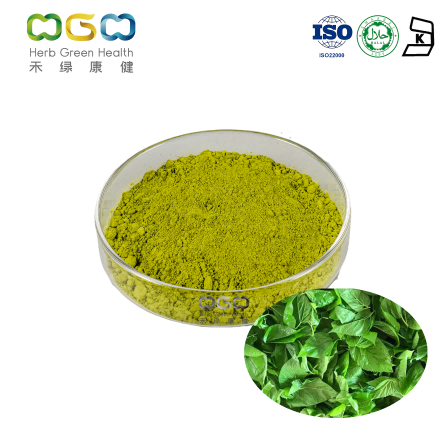
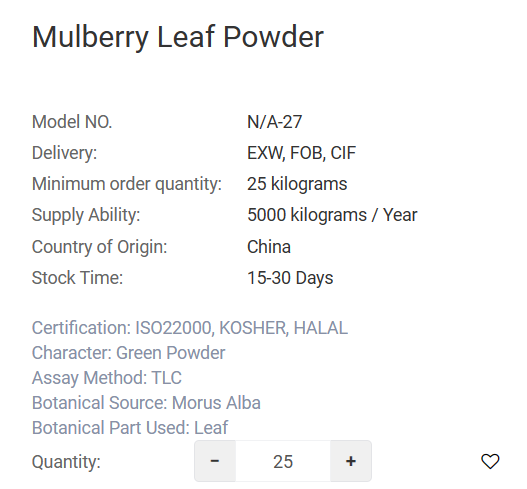
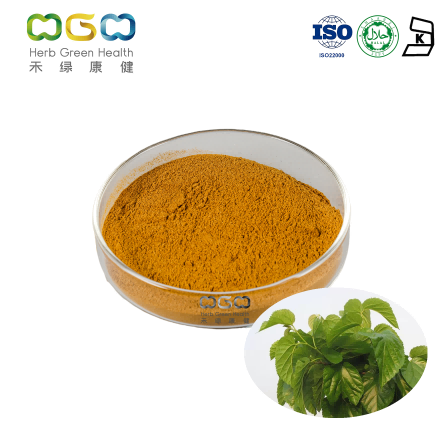
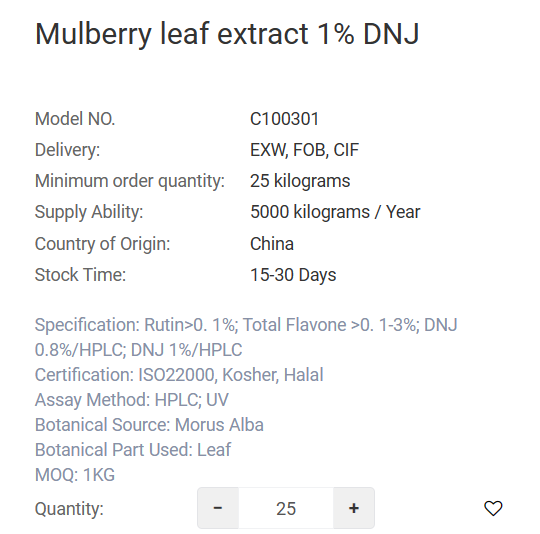
Mulberry leaves-derived products in the form of powders, extracts and capsules are now commercially available as functional foods and dietary supplements for controlling body weight and blood glucose. It is one of the most promising of the medicinal plants.
Our products: